
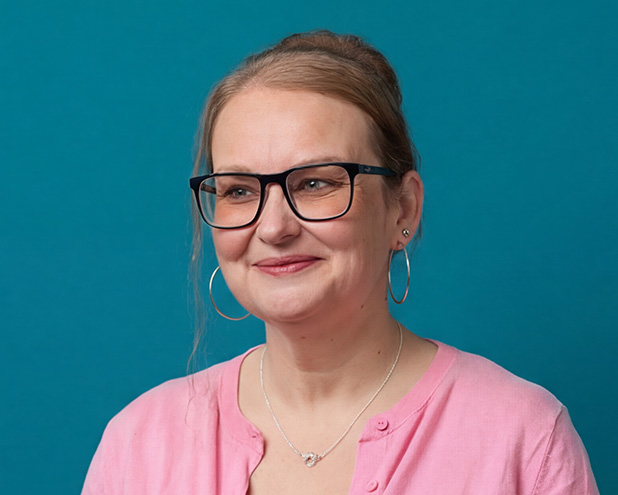
Meet Rae
Strategic Partnerships Manager, Shared Services
“If you care about doing work that genuinely affects people’s lives, it’s a good place to be.”
I focus on patient experience, patient insight and patient communications, and I also shape patient support content through Autism Unlocked and Real Life. My work is about listening to what patients tell us and turning that into clearer information, safer journeys, and support that feels genuinely useful.
High standards mean accuracy, clarity and compassion, especially when things are sensitive. It means using health literacy principles, sense-checking wording so it works for patients and teams, and making sure we do not just gather feedback, but act on it. For our content programmes, it also means co-production and clinical oversight, so what we create is both authentic and safe.
I joined because I’d seen how much the right support, and the right language, can matter when someone is struggling. My years in primary teaching taught me to explain things clearly, notice what people are not saying and help them feel safe. Clinical Partners felt like the right place to bring that into mental healthcare.
When I joined seven years ago, the business looked very different, but what’s surprised me most is that the heart of it has stayed the same.
The values were there from the start, and over time they’ve become clearer and more consistently reflected in how we work, especially when things are busy or challenging. I’ve also been struck by the scale and complexity behind the scenes, and how much trust can be built or lost through small things like clarity, tone and keeping people informed.
A good day is when patient feedback leads to a practical improvement, clearer comms, better scripts, a smoother process, or a piece of insight that leads to action. It also feels meaningful when our content work feels genuinely helpful, especially when co-produced Real Life content helps someone understand themselves, feel less alone, or take a practical next step.
Days are harder when priorities shift quickly and there’s urgent, high-risk work to manage, because behind every change there are real patients who may already feel anxious, overwhelmed, or unsure. In those moments, it matters that we get things right, not just respond quickly.
I manage that by staying calm, focusing on what patients most need to know to feel safe and supported, and creating structure through toolkits, scripts, and templates so our responses stay clear, consistent, and compassionate, and fewer concerns build up.
I’m supported through strong cross team working that helps patient voice turn into practical action. I have access to the insight and the space to share it openly, and I work closely with Ops, Clinical, Complaints, NHS BD and Marketing to translate themes into improvements, whether that’s changes to processes, clearer comms, or better support content. Being able to sense check messaging, toolkits and content with colleagues across teams helps us stay consistent and ensures what we put out genuinely meets patient needs.
If you care about doing work that genuinely affects people’s lives, it’s a good place to be. It is fast paced and complex, but there is a real focus on doing the right thing, and there is space to improve things if you bring empathy, good judgement, and a commitment to learning. You’ll learn a lot quickly and you’ll be surrounded by people who care about doing things properly.